


Local News
Twelve towns failed to comply with the MBTA Communities Act by the end of 2025. Now they face legal threats, lost funding, and deep uncertainty.
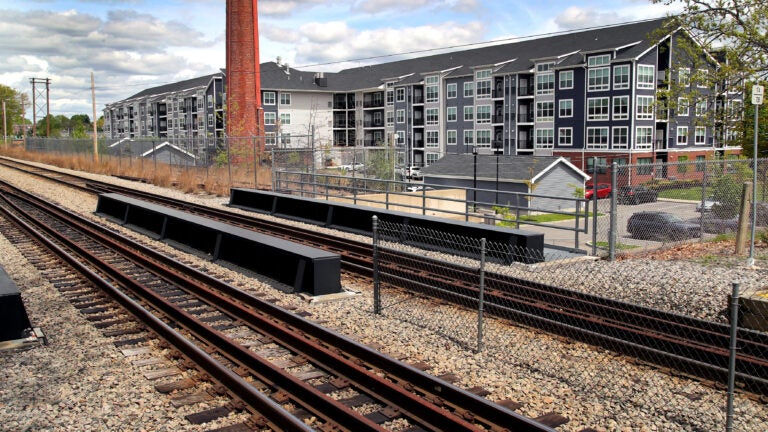
On Dec. 31, 2025, as Massachusetts residents rang in the New Year, a quieter but consequential deadline passed for dozens of cities and towns near public transit.
Under the MBTA Communities Act — a 2021 law requiring municipalities served by or adjacent to MBTA transit to allow multifamily housing through zoning — 35 “adjacent small towns” were required to comply by the end of 2025. Twelve, however, did not. The noncompliant communities are: Carver, Dracut, East Bridgewater, Freetown, Halifax, Holden, Marblehead, Middleton, Rehoboth, Tewksbury, Wilmington, and Winthrop.
Those communities now face possible enforcement lawsuits from the Mass. Attorney General’s Office and the loss of certain state grant funding. But nearly two weeks into 2026, town officials say the defining feature of this moment is not fear — it’s uncertainty.
Towns say they’re trying — but struggling
Some noncompliant towns say they are still working toward compliance, despite repeated defeats at town meeting.
In Holden and Dracut, local leaders are working toward zoning proposals they hope could eventually pass. Both towns have formed a committee or working group to identify areas that meet state requirements while addressing resident concerns.
“At a high level, I would say we’re continuing to work,” said Dracut’s assistant town manager Alison Manugian. The committee is “finding a pathway toward compliance that they think the community could support.”
That has been a challenge. Dracut voters rejected three MBTA Communities zoning articles at two separate town meetings between 2024 and 2025. Holden voters also rejected a 3A zoning amendment last spring; the town intends to bring a new proposal to a town meeting at the end of February.
Officials in both towns say there’s deep skepticism from residents about the law itself.
“There are still a lot of folks in town who feel like the state is trying to take over local zoning controls,” Manugian said. “And there’s some frustration with that.”
“They resent the concept,” Holden Town Manager Peter Lukes added.
‘Paper zoning’ and political reality
Some towns have tried to pass so-called “paper zoning” — districts that technically allow multifamily housing but are unlikely to ever be developed.
That approach has passed in other communities, Lukes said. “They did that on purpose.”
But even that approach may not be enough, according to Lukes. Officials say residents want to know impacts and costs — information that’s difficult to realistically provide before a vote without knowing what would be developed.
Rather than rush another vote, Dracut plans to slow the process and hold another public information session.
“If we need to go a little more slowly to get there, we’re probably better off than if we try to react to some sort of knee-jerk response prior to or even after the state makes their next move,” Manugian said.
Enforcement threats — but little clarity
In July 2025, Attorney General Andrea Campbell warned that her office could pursue enforcement against noncompliant towns beginning in January 2026. But town officials say they have heard little from the state since the deadline passed.
“We haven’t heard from the AG’s office,” said Wilmington’s Town Manager Eric Slagle. “We hope to have dialogue … but I don’t anticipate the town’s going to do anything affirmatively until and unless the state acts.”
Others are openly skeptical that enforcement would succeed in court.
Lukes questioned whether a court could compel town meeting voters to approve zoning. “A judge would be hard pressed to overrule a democratic process where a municipality and their residents voted against a certain zoning proposal,” he said.
That argument is now playing out in court. Marshfield, a previously noncompliant town, has appealed to the Supreme Judicial Court, arguing the law effectively disenfranchises town meeting voters by requiring they vote “yes” to comply with the law.
For towns like Middleton, the lack of clarity itself is the problem.
“The state hasn’t made any effort to tell us what they’re actually going to do,” said Middleton Town Manager Justin Sultzbach. “They won’t really provide any clear indication beyond ‘you’ll be in trouble.’”
In a statement to Boston.com, AG Campbell said “the SJC has made clear that compliance with state law is mandatory, and my office is prepared to take the enforcement action necessary to achieve compliance.”
Grant losses — uneven and unpredictable
Grant funding has emerged as the state’s most tangible enforcement tool, but towns say its application has been inconsistent.
In Holden, Lukes said the town has lost only modest amounts so far: a recycling grant worth around $5,000 and ineligibility for another grant worth around $20,000.
“So far, it hasn’t been a big deal,” he said. “But maybe it will be over time.”
In Middleton, the consequences have been much steeper. Sultzbach said the town lost a $2 million MassWorks grant that had already been awarded, along with funding for a Council on Aging passenger van.
“I’ve never had a situation where the goal posts move that erratically and frequently,” he said.
Winthrop, another noncompliant MBTA Community, lost $1.2 million in climate resiliency funding, Boston.com previously reported.
‘We don’t know what comes next’
Some towns are still searching for a compromise. Others, like Middleton, have no plans to bring MBTA Communities zoning back to voters after residents rejected it twice and are waiting on court rulings over an unfunded mandate appeal.
At this point, it’s become less about housing, Sultzbach said. “It’s more about town versus state.”
That tension — between local control, state mandates, and unclear enforcement — now defines the future for Massachusetts’ remaining noncompliant MBTA Communities.
“We really honestly don’t know what comes next,” Sultzbach said.
Of the 177 towns covered by the law, 165 (about 93%) complied by the end of 2025. In a statement to Boston.com, Housing and Livable Communities Secretary Ed Augustus said the state remains focused on the broader goal.
“It’s great that over 90 percent of MBTA Communities have passed new zoning under this law, with 7,000 new housing units already in the pipeline,” Augustus said. “We continue to work with the remaining communities to support them in passing zoning that meets their needs.”

Sign up for the Today newsletter
Get everything you need to know to start your day, delivered right to your inbox every morning.

