


Local News
A’zella Ortiz, 4, was allegedly killed by her father after years of “chronic and cumulative” neglect. DCF thought they were in New York.
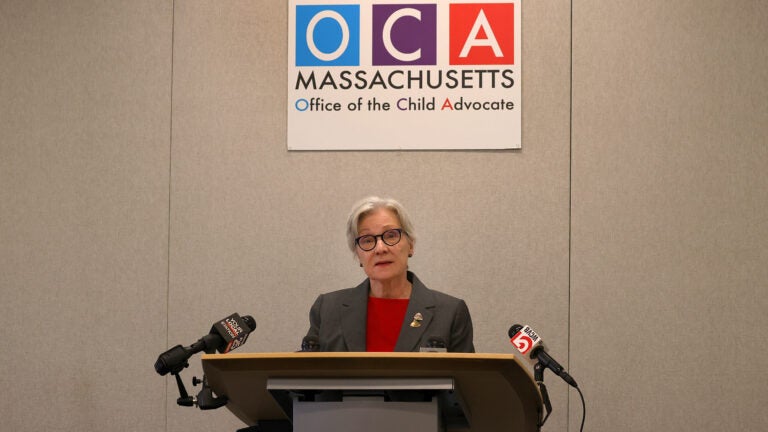
The Department of Children and Families erroneously thought 4-year-old A’zella Ortiz had moved to New York before she was allegedly killed by her father in Worcester last year, a new report says, which argues DCF failed to support her and her siblings for years.
“Although the ultimate tragic outcome of this case is rare, in other ways this case is like the vast majority of DCF cases,” the new report from the state’s Office of the Child Advocate said. Nearly 80 percent of the families served by DCF are “intact families,” the report said, meaning the children are not removed from their caregivers.
Francisco Ortiz is accused of killing A’zella in Worcester in October of 2024 and pleaded not guilty to murder, reckless endangerment of a child, and permitting injury to a child. He remains in custody awaiting trial.
The OCA, an independent state agency, released a 65-page report of its investigation into the death of A’zella.
The other two children in the home were found severely malnourished, dehydrated, and injured, while the home was in “deplorable” condition, with a firearm and drug paraphernalia within the children’s reach, the report said. One child tested positive for fentanyl, had severe dental decay, and was non-verbal due to the abuse. The two-year-old had a skull fracture, according to the report.
“The death of any child is devastating. We are heartbroken by the loss of A’zella, and we appreciate the Office of the Child Advocate’s examination of this case,” a spokesperson for DCF said in a statement. “DCF is committed to doing everything we can to enhance safety for children.”
OCA: DCF failed to update its approach with family over several years
The report details that DCF saw no progress with the family, which also included mother Krystal Romero and three children, over multiple years, despite rising risk factors and other growing concerns. OCA also reported that DCF has “no framework” to govern case worker’s involvement intact families, particularly in regards to children facing neglect.
“Families are not static, and a DCF case management team should have an evolving understanding of a family’s functioning, needs, safety, risk and well-being during their involvement,” the OCA wrote.
DCF served the family, which included A’zella and a younger and older sibling, for three years and eight months until Oct. 20, 2023. DCF, which hadn’t seen the children for 114 days, closed the case, “believing the family was residing in New York, information that was later determined to be inaccurate.”
The OCA acknowledged that a year passed between the closure of the case and A’zella’s death with no report of abuse or neglect filed with DCF about the children.
The OCA found that DCF didn’t evolve its approach with the parents as the children were at higher and higher risk, the report said. Beginning in 2018, the family was first scored “low risk” for future maltreatment, then moderate in 2020, and high risk in 2022 — all due to allegedly exposing the three newborns to marijuana.
“The DCF risk assessment scores indicated a clear progression of risk to the children. Despite the escalation and risk to the children and the parents’ refusal to engage in services to alleviate that risk, the DCF case management team did not reevaluate their clinical formulation of the family,” the OCA wrote. “As a result, the children remained chronically neglected.”
While the report lauded DCF’s “strength” of conducting monthly home visits, the questions and approach didn’t change from 2020 to 2023.
The children weren’t engaged by DCF case workers, OCA said. During that time, the children’s neglect “was chronic and cumulative … manifesting in missed health care appointments, failure to meet development milestones, poor nutrition, social isolation, unsafe housing, and parent substance use.”
Recommendations: DCF should strengthen case closing policy, clinical formulation guidelines
The report recommended DCF revise and update its Case Closing Policy, develop a policy about case consultations to make sure recommendations are being addressed, and establish a guide to ensure work with intact families like the Romero Ortizes, “is well researched, well resourced, and multifaceted.”
DCF should also strengthen its “clinical formulation” to be child-centered, OCA opined, and conduct training on it, child development and growth, parent engagement, substance use, and neglect, particularly chronic neglect.
In an email, DCF addressed the OCA’s recommendations. The department said it updated its case closing policy in 2017 but will review the policy. DCF will also implement a new case practice policy in 2026 to clarify clinical formulation. It pursued training in areas of critical thinking, de-escalation, interviewing children, and mental health trauma diagnosis and treatment in 2024.
“We will address the concerns raised by the OCA,” the DCF spokesperson said, “including reviewing our policy when we are considering closing a case, assessing training needs, and providing clearer guidance on assessing families for risk factors commonly associated with child abuse and neglect.”

Sign up for the Today newsletter
Get everything you need to know to start your day, delivered right to your inbox every morning.

