


Environment
This sighting is the first documented case of a right whale traveling east to west initially, instead of the other way around.
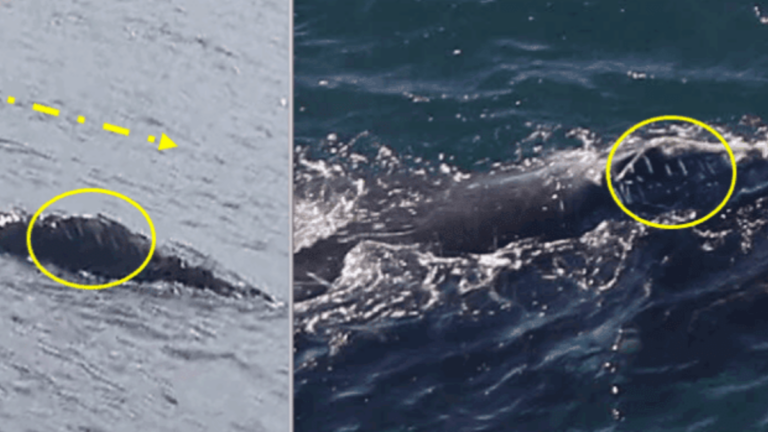
The discovery of an endangered whale sighted off the coast of Boston gave researchers an incredibly unique “tail” to tell.
Observers from the Center for Coastal Studies (CCS) Right Whale Ecology Program spotted a North Atlantic right whale off Boston’s coast Nov. 19 while conducting an aerial survey, according to a CCS press release. What made this already rare sighting extraordinary was that the whale apparently traveled 3,000 miles across the Atlantic Ocean to get there.
“The first sighting of the year is always exciting, but we didn’t yet realize just how remarkable this one would turn out to be,” CCS researcher Ryan Schosberg said in the release.
Noting unique scarring on the right side of the whale’s head, researchers in the New England Aquarium’s Anderson Cabot Center for Ocean Life matched it to a whale that had been seen near Donegal Bay, Ireland, in July 2024, as reported by the Irish Whale & Dolphin Group.
“While the photos from the 2024 Ireland sighting showed some unique features, we were unsure the quality of the photos would be sufficient to identify the whale in the future,” said Lindsey Jones, a scientist at the Anderson Cabot Center. “After a flurry of matching effort and emails, we were excited to discover the first ever photo-ID match between Ireland and the U.S. East Coast.”
Though right whales have been seen traveling from the western Atlantic to the eastern Atlantic and back, the CCS said this appears to be the first documented case of a whale initially traveling east to west. This discovery has led researchers to believe that right whale habitats on the western side of the North Atlantic may still be suitable, according to the press release.
North Atlantic right whales are critically endangered, with an estimated population of 384, according to the CCS. While sightings of whales from European waters happen every few years, these events are rarely photographed well enough to be compared to the New England Aquarium’s catalogued record.
“Securing any international photo ID matches of large whales requires a lot of effort and a fair bit of luck,” said Pádraig Whooley, sightings officer at the Irish Whale & Dolphin Group. “When these matches are made across ocean basins, you need to get even luckier. So, we had zero expectation of matching this solitary right whale from Donegal Bay in July 2024, the first validated Irish record with photographic evidence in over a century.”
Researchers investigated further and found catalog data showing that six more right whales first photographed along the North American coast have appeared in European waters, according to the CCS. Dr. Daniel Palacios, director of the Right Whale Ecology Program, said that the discovery shows how right whales have endured despite their endangered status.
“Seeing a whale photographed in Ireland reappear off Boston is extraordinary,” Palacios said. “Encounters like this highlight both their resilience and the importance of international cooperation to support their recovery.”
Sign up for the Today newsletter
Get everything you need to know to start your day, delivered right to your inbox every morning.

