


New England Revolution
“We look forward to continued collaboration with Everett, Boston, and the community as the project advances through local and state review and as we take the many next steps necessary to bring this vision to life.”
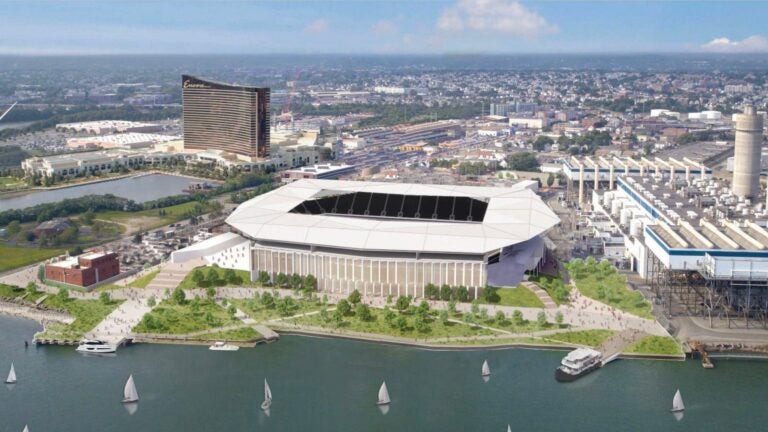
The Revolution (via the Kraft Group) announced on Wednesday that the club has reached community impact agreements with both Boston and Everett regarding its ongoing pursuit of building a soccer-specific stadium.
According to details of the agreements initially reported by Jon Chesto of The Boston Globe, Boston will receive “nearly $48 million” over a 15-year period to help with infrastructure projects focused around the neighborhood of Charlestown (which connects to the proposed stadium site in Everett).
Everett’s agreement, per Chesto, includes $20 million for the building of a park along the Mystic River alongside the proposed stadium (as well as separate costs for its ongoing maintenance). The city will also get $17.5 million to help expand infrastructure at the Somerville Orange Line stop located at Assembly. The eventual goal for the project is to help create greater access for the proposed pedestrian bridge that is planned to be built from Assembly across the Mystic River to Everett (located near the proposed stadium site).
The current Revolution proposal, an approximately 24,000-seater stadium located on the Everett waterfront at 173 Alford Street (currently the site of a shuttered power plant), required state legislation in 2024 to carve out a 43-acre parcel of land that falls within a “Designated Port Area.” In order to build anything that isn’t industrial-related in the area, legislators had to give clearance.
As part of the deal, lawmakers mandated that the Kraft Group reach community impact agreements with both Boston and Everett before the end of 2025. Failure to reach agreements by the deadline would have necessitated arbitration.
Now, the process can continue to move forward. The next step will be a thorough review process by local and state officials, particularly the Massachusetts Environmental Policy Act (MEPA) office as the clean-up process of the former power plant is examined.
The Revolution will continue to play at Gillette Stadium in the interim period — where the club has played since the stadium opened in 2002 — but have never been closer to potentially building a venue of their own.
Here’s the complete Kraft Group statement on the agreements:
The Kraft Group has reached agreements with the cities of Everett and Boston, marking an important milestone in our effort to transform a long‑neglected industrial site along the Mystic River into a vibrant, publicly accessible waterfront destination and the future home of the New England Revolution. These agreements reflect years of collaboration with city leaders and community stakeholders to ensure the project delivers meaningful, lasting benefits for residents while addressing transportation, environmental, and municipal impacts. We are especially grateful for Mayor Carlo DeMaria’s leadership and vision. At its core, this is an investment in Everett and its future. In addition, it provides improved access and an enhanced neighborhood experience by removing a physical and visual barrier for the residents of Charlestown and we appreciate Mayor Michelle Wu and her team’s partnership.
Under the agreements, we will undertake significant environmental remediation and demolition of the long‑vacant powerplant, invest in extensive traffic and transportation improvements, and deliver substantial community benefits, including millions of dollars towards infrastructure improvements. The project will open the waterfront with the creation of a new public park, strengthen pedestrian and bicycle connectivity, and enhance access to public transit. We will also support Everett Public Schools, expand local employment opportunities, and make the stadium and waterfront park available for community and school events. Our shared commitment to Everett and Boston residents includes prioritizing local hiring, youth soccer clinics, and community programming. This project is intended to be a true neighborhood asset.
These agreements demonstrate the power of public‑private partnership to deliver transformational outcomes. We look forward to continued collaboration with Everett, Boston, and the community as the project advances through local and state review and as we take the many next steps necessary to bring this vision to life.”
Sign up for the Today newsletter
Get everything you need to know to start your day, delivered right to your inbox every morning.

