


Health
Half a dozen cardiologists weighed in on why shoveling can trigger heart attacks and how to stay safe.
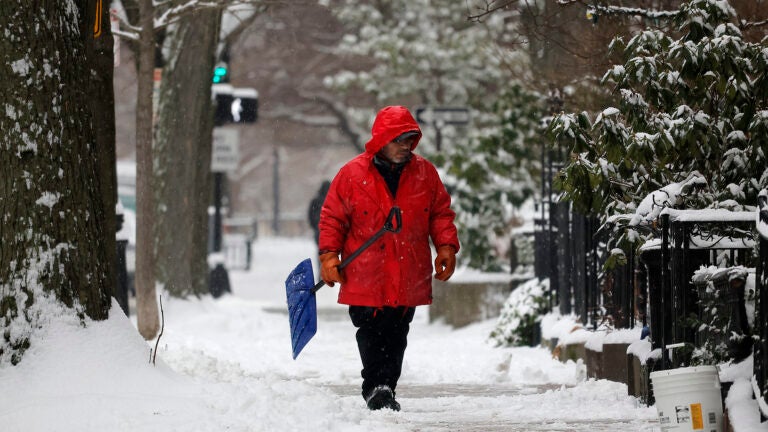
Last weekend’s winter storm was one of Massachusetts’ biggest in years, with some towns receiving over two feet of snow. With another potential storm on the way, it won’t be long before people are shoveling their driveways again.
However, cardiologists in the Greater Boston area are warning residents to exercise caution as they clear a path. The physical exertion that comes with shoveling snow has been repeatedly linked to heart attacks, and the most recent storm was no different.
“I think this is a fairly recognized phenomenon,” said Petro Gjini, a cardiologist at Sturdy Health in Attleboro. “Every time there’s a storm, there’s generally an uptick in ER visits with shoveling-related symptoms.”
Earlier this week at UMass Memorial Medical Center in Worcester, cardiac specialists treated eight patients for major heart attacks, known as STEMI heart attacks, in a 24-hour window. Shoveling snow was reported as the trigger for all but one of these patients, according to a hospital representative.
Youssef Rahban, a cardiologist at UMass Memorial, said it was the sharpest spike he had seen in six years of practicing medicine there.
“It may have been related to the storm intensity and the amount of snow we got compared to previous years,” Rahban said. “This was certainly a bigger-than-expected spike in heart attacks.”
What’s the link between shoveling snow and heart attacks?
Amir Lotfi, chief of cardiology at Baystate Health in Springfield, also noted an uptick from the expected “baseline of heart attacks” that he usually handles. He attributed this phenomenon to a number of factors, including the frigid temperatures and the more sedentary lifestyles that people tend to live during the winter months.
“In the wintertime, we kind of decondition,” Lotfi said. “On top of that, it’s very cold, so your body’s way of conserving heat is to close the blood vessels down so you have your core body temperature up.”
Despite shoveling seeming on the surface like a less involved exercise than going for a run or a swim, it actually can induce an extreme level of cardiovascular stress within minutes.
“Within two minutes of shoveling, you can actually reach about 85 percent of your maximal predicted heart rate,” Gjini said. “Incidentally, that’s the stress diagnostic threshold that we use when we do our stress tests. I’ve had, anecdotally, patients of mine who were able to perform very well on a stress test and then they got symptoms when they shoveled.”
Claudia Hochberg, an interventional cardiologist at Boston Medical Center, added that the specific muscular and vascular systems that shoveling engages is more strenuous.
“Shoveling is mostly upper-arm work, which is a little bit more taxing than and demanding on the heart than leg work is,” Hochberg said. “We tell all our patients who have pre-existing heart disease not to shovel.”
Symptoms to watch out for while shoveling include chest pain or pressure, arm pain, excessive sweatiness, shortness of breath, and nausea, according to Hochberg.
How do I know if I’m at additional risk?
As with any heart-related issue, the risks of shoveling snow are drastically increased for people with preexisting conditions. However, age can also be a factor.
Sawalla Guseh, who specializes in sports cardiology at Massachusetts General Hospital, said that age-related risk begins to grow as early as age 35, with a much bigger jump happening around age 55 to 60.
James Udelson, chief of cardiology at Tufts Medical Center, noted more patients coming in with heart issues than usual after the weekend storm. Though he said people with pre-existing conditions are most at risk, those who don’t can face dire consequences if they doubt their symptoms
“The most important thing for people who have chest pain at home or are probably having a heart attack is speed,” Udelson said. “Someone who’s never had it before, they may hesitate… and that’s a problem if they are having a heart attack.”
Even for those who shovel without incident, symptoms can go unnoticed and result in a heart attack days afterward.
“It tends to happen either immediately or up to a week after, so I’m expecting folks to see more of it now and into the coming week,” Guseh said.
What can I do to reduce my risk?
Each cardiologist’s advice was slightly different, but they offered plenty of ways to reduce the risk of a heart attack when shoveling snow. Depending on individual abilities and needs, they recommended going slow, taking breaks every five to 10 minutes, pushing snow rather than lifting it, shoveling smaller loads, warming up regularly, and getting help from a friend, family member, or neighbor.
For people who believe they may be experiencing symptoms but aren’t sure, it’s always best to err on the side of caution.
“If you’re unsure about the chest pressure or the symptoms that you’re having, it’s often better to be wrong and get evaluated than to have a heart attack and miss it,” Rahban said.
Sign up for the Today newsletter
Get everything you need to know to start your day, delivered right to your inbox every morning.

