


Local News
The state’s move to acquire and demolish 13 homes stirs memories of earlier projects that carved up the town.
Suzanne Kreiter / The Boston Globe, File
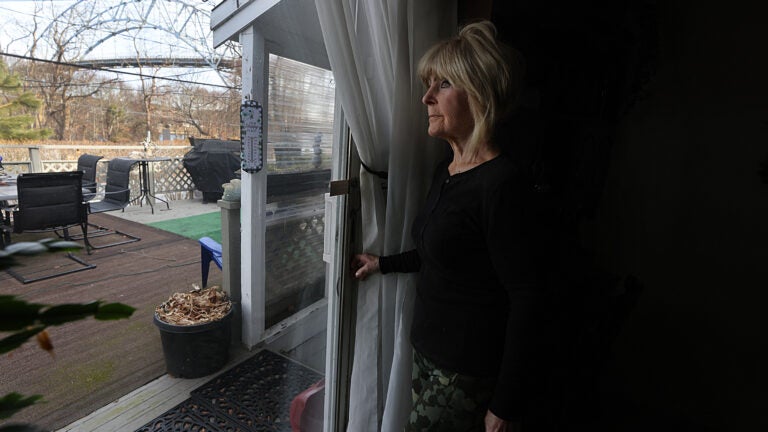
Along Eleanor Avenue in Bourne, a small, tight-knit neighborhood with deep roots is about to disappear. The state is taking 13 homes to make way for the new Sagamore Bridge and its network of access roads.
Some of the families have called the street home for decades and have established connections with their neighbors — eating at each other’s dinner tables, shoveling each other’s driveways, and asking about children and grandchildren.
“That’s what’s tough about eminent domain,” said Phillip Michaud, whose 80-year-old mother Joyce’s home deed transferred to the state earlier this month. “You take a small community and all the homes there, they’re now all going to be scattered all over.”
Her home is one of four properties the state has acquired so far. Officials say they need the land in the Round Hill neighborhood to build two new arch-style bridges and their accompanying roadways, with construction expected to begin in 2028 and stretch into the late 2030s.
For Bourne, though, forced relocation is nothing new. Residents have endured waves of land takings for more than a century — from the construction of the Cape Cod Canal, to the arrival of the Massachusetts Maritime Academy, to transportation projects that reshaped local business districts.
The canal
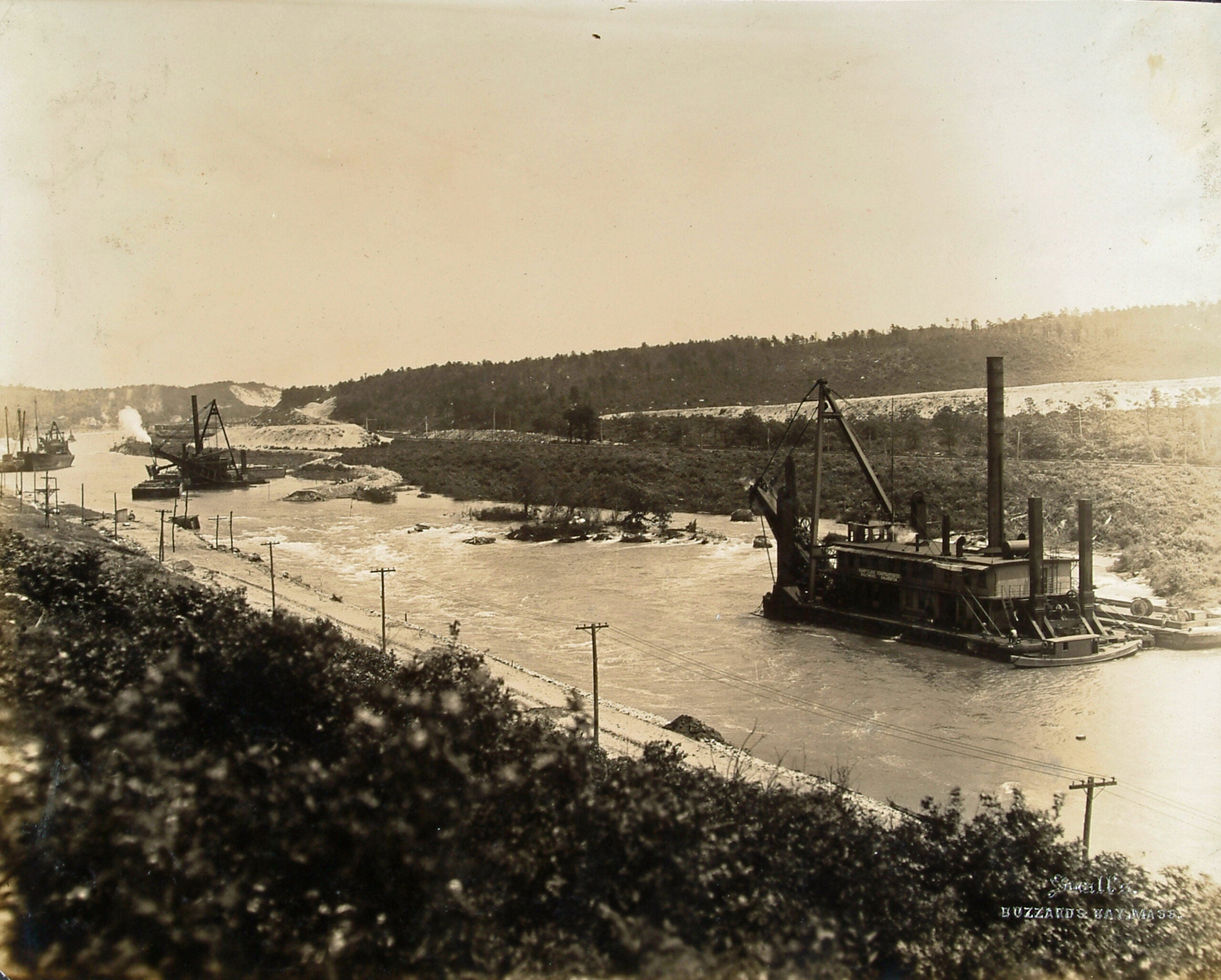
According to the state, in 1904, financier August Belmont II and civil engineer William Barclay Parsons began construction of the Cape Cod Canal to help ships avoid the dangerous outer banks of Cape Cod.
That construction came at a steep local cost. The company making the canal demolished around 25 homes and relocated about another 10, said Jerry Ellis, 91, a lifelong Bourne resident, former selectman, and superintendent of the Sagamore Cemetery.
Even the family home of Jonathon Bourne, the town’s namesake, was taken.
But even more disturbing was the matter of relocating two cemeteries. According to Boston Post clippings from 1909, 17 bodies from the Bourne Cemetery and 45 from the Emory Ellis Cemetery needed to be moved, as they stood in the path of the proposed canal.
According to a Boston Post article from July 17, 1909, Emory Ellis effectively stopped canal construction by blocking efforts to relocate bodies from his family’s cemetery by posting “No trespass” signs.
Jerry Ellis added that Emory guarded the grounds with a shotgun until he obtained preferred burial plots in the Sagamore Cemetery, which are still there today.
There have been several land takings in Bourne since, Ellis said, but nothing recently like what is happening near the bridge.
Some of the homes in the neighborhood date back to the mid-1950s, and the same families have lived there for decades, he said.
Ellis said that when the neighborhood was built up through the early 2000s, “no one ever foresaw” the state would build a new bridge. It wasn’t until five or six years ago that plans evolved to include expanding the bridges, raising the possibility of eminent domain.
Looking ahead, Ellis, who sees a tight housing market in the Sagamore village, said, “I have no idea where they will move to.”
Taylor’s Point
Selectman Peter Meier said he understands what residents are facing — his own grandparents lost their home when the Massachusetts Maritime Academy expanded into Taylor’s Point. In the 1960s, the state took more than 100 properties for the academy, and many owners took the money and moved on, especially those with second homes.
Meier’s family was luckier: A nearby home went up for sale, allowing them to stay. Today, about 100 homes remain in Taylor’s Point, a mix of year-round and summer residences.
Even now, when Mass Maritime discusses expanding by purchasing properties as they become available, it revives memories of those takings — despite a memorandum of understanding promising the academy will no longer use eminent domain.
“It will always be in the back of their mind because it has been done to them,” Meier said.
The town also took nine properties in the neighborhood to build a marina in the 1980s aimed at revitalizing Buzzards Bay. Unlike other takings, Meier said, that one wasn’t contentious.
Route 25 expansion
In 1982, the same year construction on the marina began, after 25 years of battling the state over plans to run a highway through her family’s farmland, Hope Ingersoll won her court battle.
According to The New York Times, state transportation officials said they would run the final 2.5-mile section of Route 25 around most of Grazing Fields Farm, resulting in the big curve seen in the highway today leading up to the Bourne Bridge.
Although the highway bypassed the farm, Meier said, construction relocated some key roadways in the town and placed businesses that were once at the center of traffic on a dead end.
The flyover
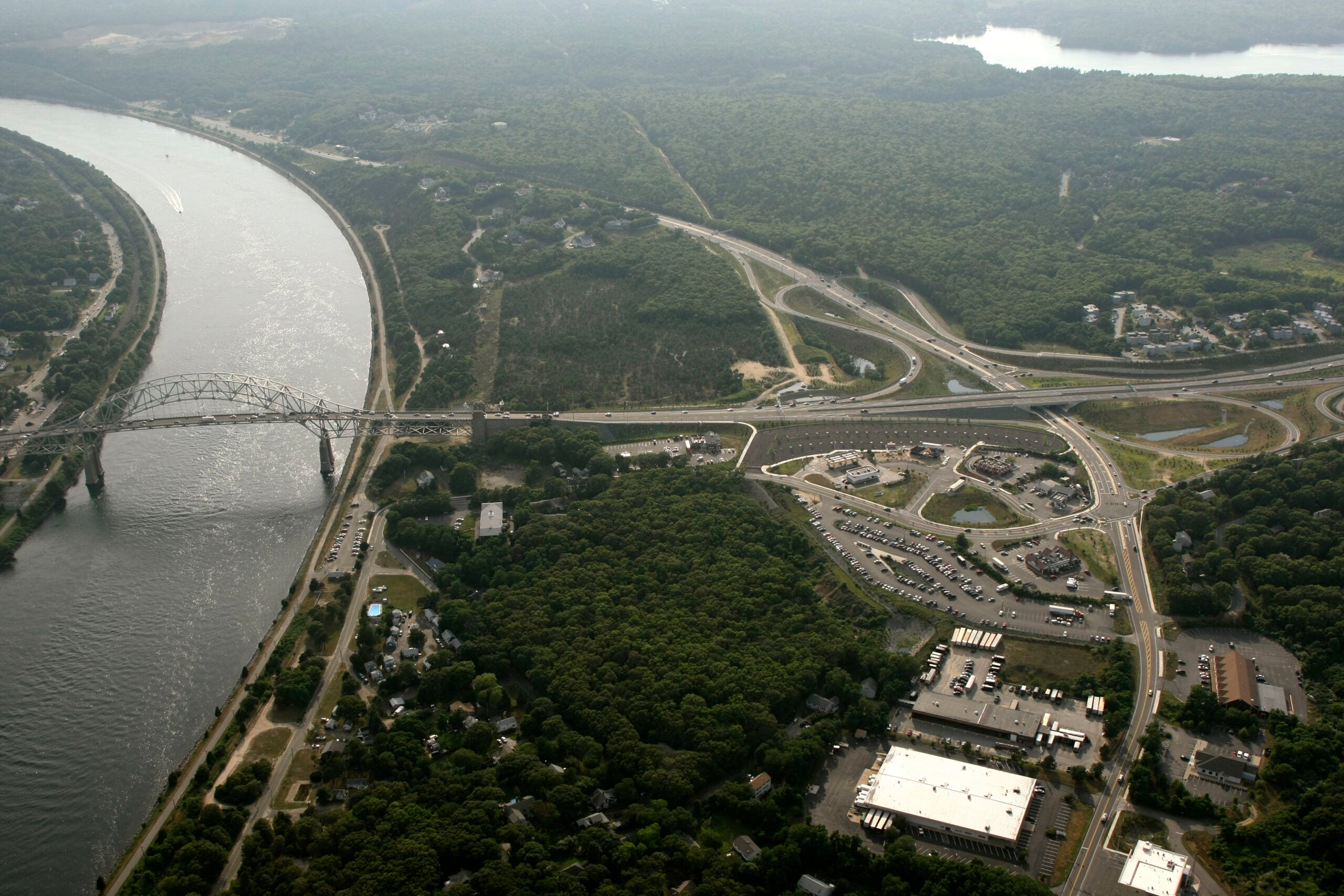
More land takings happened when the Sagamore Rotary was replaced by a “flyover” in 2006 to 2007 to ease traffic congestion. The project took a few homes and businesses with it.
Meier said the Bourne Chamber of Commerce lost their visitor center, and the Sagamore Fire Station moved down the street.
In one case, the Sorenti Brothers Inc., which owned a Shell gas station and convenience store, won $5.3 million in a 2015 verdict.
Replacement of the Sagamore Bridge
If Meier could make these problems go away, he would. But he understands it’s for the better good.
“We are a very resilient community,” he said. “We’ve been through a lot, and we will persevere, and we’ll be a better community for it.”
For Michaud, who also grew up in the Round Hill neighborhood, he will be spending the next few months packing up his mother’s house and searching for a place she can afford nearby — if one exists. The family is appealing the state’s offer, arguing it falls below fair market value.
Still, he’s trying to stay hopeful.
“I think it’ll all work out,” Michaud said. “I have faith the state will do the right thing. But right now, none of us knows where we’re going next.”

Sign up for the Today newsletter
Get everything you need to know to start your day, delivered right to your inbox every morning.

