


Local News
“A different group of people are coming before the Parole Board, largely because of the Mattis decision,” said lawyer Ryan Schiff.
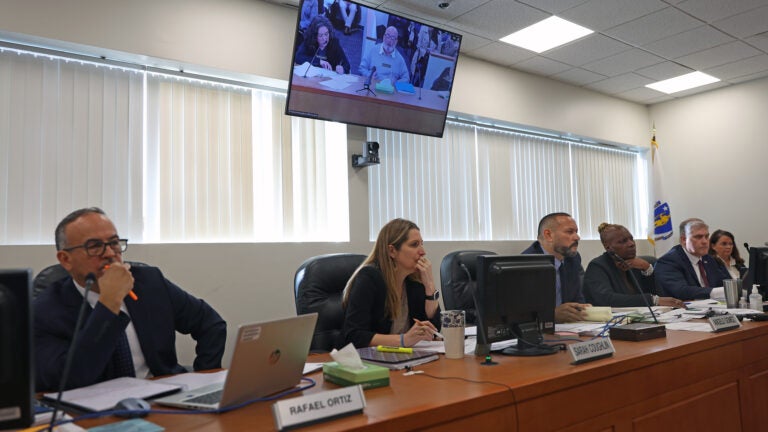
The parole rate in Massachusetts increased in 2024, the Parole Board chair told legislators last month, in part due to a sentencing decision leading to the release of people previously sentenced to die in prison.
“Our paroling rates are up, and we have a lot more lifers being released,” Parole Board Chair Angelo Gomez said earlier this month, per the State House News Service. “It looks like we’re up about 3.5 percent, and that has to do with various factors: mandatory release, medical releases, paroling rates. So our numbers are going up, but it’s not a negative.”
The 3.5 percent “is not an increase in the paroling rate but rather reflects the increase in the number of persons released to parole supervision,” Brenna Galvin, a spokesperson for the Parole Board, clarified to Boston.com. “The parole rate reflects the percentage of cases in which the Board votes to grant parole, while the increase in persons released refers to the total number of individuals who actually enter parole supervision during a given period.”
In December 2024, eight people became the first “youthful offenders” to be granted parole after the state’s highest court ruled in the decision Commonwealth v. Sheldon Mattis that adults under the age of 21 cannot be sentenced to life in prison without parole.
Life sentence hearings saw a 15 percent increase in parole rates in one year. In 2023, the parole rate for life sentence hearings was 57 percent, according to the Board’s annual reports. According to data shared by Galvin, the life sentence hearings parole rate was 72 percent in 2024.
“A different group of people are coming before the Parole Board, largely because of the Mattis decision,” said lawyer Ryan Schiff, who argued Mattis in front of the Supreme Judicial Court. “Now, we have people who’ve been in prison for many years, who’ve done a lot of rehabilitative work and have changed themselves and are making stronger cases for parole.”
During a Correctional Consolidation and Collaboration hearing, Gomez shared overall parole data from 2024, when he said the parole rate was 68 percent.
“We don’t have the data for 2025. That report isn’t out. We’re working on those numbers still,” Gomez said. “I presume, based on our history, if you look at 2023, it’s similar in nature, it’s not going higher. Our paroling rates average about mid 60s to low 70s.”
Currently, there are 1,436 people on parole, Galvin said, with 1,303 living in Massachusetts and 133 people out-of-state. According to the data Gomez presented to legislators, there were 1,176 active parolees on continued supervision in 2023 and 1,280 in 2024, marking a slight increase.
Of the 1,280, Gomez told lawmakers, 400 are serving a life sentence on parole. Other than lifers, parolees serve an average of nine months on parole, Gomez said.
The Parole Board continued to hear Mattis hearings in 2025, but data from those hearings has yet to be released. Parole officials told legislators that 210 people were affected by the Mattis decision in 2024, and 144 people were identified as “immediately eligible.”
So far, the Board has completed 100 Mattis parole hearings, and 10 more have been scheduled. The initial cohorts of incarcerated people eligible for parole under Mattis were more likely to be paroled, Schiff said, but that trend has dropped off.
“The people who’ve been in there the longest present the best cases for parole,” Schiff said. “The Parole Board isn’t just letting anybody who comes before them out, they are carefully looking, examining their cases, making sure that they’ve done the work that they need to do to succeed, and that they have a good plan for how they’re going to live safely outside of prison.”

Sign up for the Today newsletter
Get everything you need to know to start your day, delivered right to your inbox every morning.

