


Local News
From 2013 to 2024, the 3.3-year gap more than doubled to 6.6 years. Black life expectancy is 76.2 years, while the rest of Boston’s is 82.2.
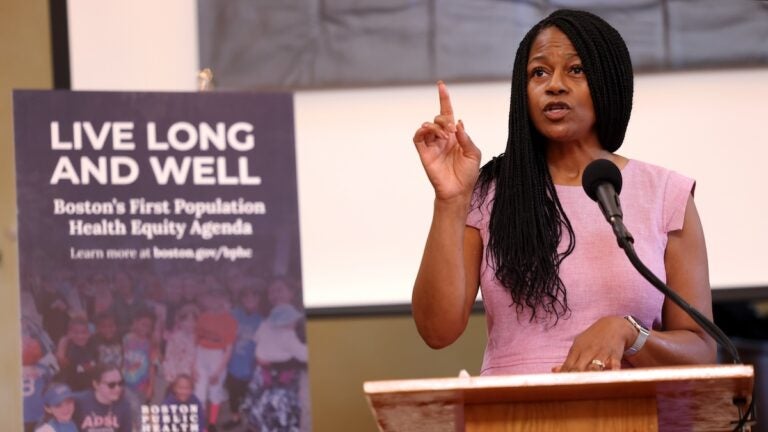
Commissioner of Public Health and Executive Director, Boston Public Health Commission. Jessica Rinaldi/The Boston Globe
Boston’s Black residents are consistently living fewer years than their non-Black neighbors, according to a new report from the city, and that life expectancy gap has doubled since 2013.
Part of the Boston Public Health Commission’s Live Long and Well Agenda, the report says that Black Bostonians have the lowest life expectancy, living an average of 77.8 years in 2013, compared to 80.5 for other residents.
By 2024, that 3.3-year gap more than doubled to 6.6 years, the city said. Black life expectancy is 76.2 years, while the rest of Boston’s is 82.2, according to the Closing the Gap: An Examination of Life Expectancy Among Black Residents in Boston report released last week.
The report is the first of its kind analyzing life expectancy among Black people and a beginning of a series addressing Boston’s diverse health needs.
“Every Boston resident deserves the opportunity to thrive in their city. This report makes clear that we have more work to do, and we’re acting with urgency,” Mayor Michelle Wu said in a press release about the report.
Between 2022 and 2024, Black men lived 9.3 fewer years than other men in Boston, and Black women lived 6.4 fewer years than other women, the report found. Unintentional overdose, cancer, and cardiometabolic disease are the three leading causes for premature mortality for Black Bostonians, the report indicates.
For Black men, the next highest cause of premature death is homicide, the report says.
“Boston cannot call itself a healthy city while Black residents continue to die years earlier than their neighbors,” City Councilor Ruthzee Louijeune said in the release. “This widening life expectancy gap is the result of systemic inequities, not individual choices, and it is preventable.”
Along with the report, BPHC announced a $1 million investment to fund organizations working to improve Black men’s health and a $1 million investment with the Dana-Farber Cancer Institute.
“This partnership with the Dana-Farber Cancer Institute for the health of our Black communities is more than collaboration — it’s a declaration that our communities have the right not just to survive, but to thrive,” City Councilor Henry Santana said.
Other initiatives include the Black Men’s Health Activation Summit for community leaders to discuss health priorities and the Mayor’s Live Long and Well Advisory Council.
The Live Long and Well agenda, which launched in 2024, includes $5 million in grants announced in August targeting the life expectancy gaps in Dorchester, Roxbury, and Mattapan — the neighborhoods with the greatest health disparities.
“We’re bringing together residents, advocates, and institutions to confront these inequities head-on and build a healthier future for everyone in our city,” Wu said.

Sign up for the Today newsletter
Get everything you need to know to start your day, delivered right to your inbox every morning.

