


Local News
53 residents in Brookline are receiving $750 per month in cash for a year.
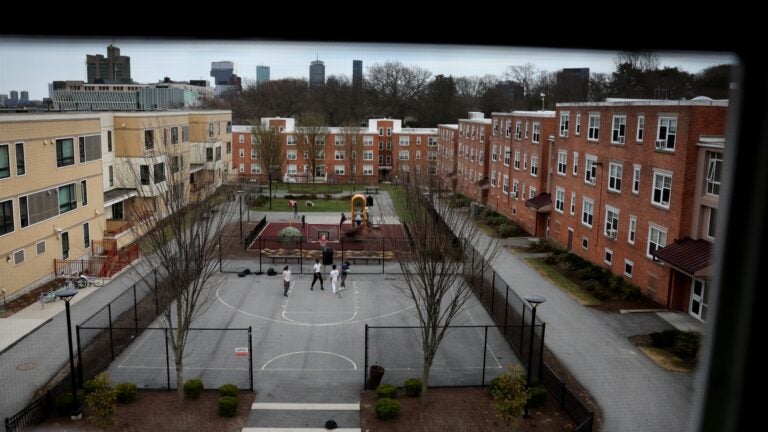
Karen, a Brookline mother of four, has to start counting her blessings, she reminded herself. She asked to only be identified by her first name to protect her privacy.
Among them? Landing an apartment with the Brookline Housing Authority after spending 14 years on the waitlist (she works at Beth Israel hospital and made the cut by a razor-thin margin of just $2 below the salary cap). It doesn’t stop there.
The 51-year-old is in remission from breast cancer, improved her credit score by over 100 points in just three months, and is currently putting her two eldest daughters through college.
And now? She is one of 53 residents in the housing authority to participate in a guaranteed income pilot program to help her find long-term financial stability.
“This is a life-changing experience,” she told Boston.com.
How does the pilot program work?
Brookline is a tale of two cities, in many ways; the town has a median income north of $140,000 and yet, one in four residents experience financial hardship, according to Zoraida Fernandez, co-president of the Brookline Community Foundation. The financial divide is a stark one, but guaranteed income programs can be a simple and incredibly effective way to take people out of poverty.
“Poverty is really just not having enough money, that’s simply what it is,” said Fernandez. “We see this as a very direct and effective way to be able to provide that financial floor that many of us enjoy and take for granted.”
The guaranteed income program, UpTogether Brookline, was a partnership between the housing authority and the Brookline Community Foundation, a nonprofit public charity. Both organizations had each planned to roll out a guaranteed income program after receiving individual grants from the American Rescue Plan Act, a pandemic-era stimulus package that provides funding to state and local governments, but joined forces to realize their goal.
The one-year-long pilot program is funded by the BHA and BCF’s pooled ARPA funds, totaling $460,000. BCF provided an additional $58,000 in private funding for the program.
Members of the program received their first $750 in unrestricted cash on Nov. 1, and will continue to do so through Oct. 1, 2026. They can use the money however they see fit.
“This is a way to put a little bit more decision making into the recipient’s hands,” Ben Stone, the housing authority’s executive director said. “It gives them a lot more agency.”
To qualify, members had to be residents in the housing authority and be a part of the Family Self Sufficiency Program, a voluntary program that helps Section 8 voucher holders access job training, educational services, and other assistance over a five year period.
The average income of BHA residents in the FSS program is around $25,000, Stone said, emphasizing that the pilot’s cumulative $9,000 over 12 months is “a significant sum to these households.”
The guaranteed income concept isn’t a new one. Several other municipalities have piloted similar programs in recent years, including Chelsea, Somerville, and Cambridge.
The program is also designed to help people think in the long term, to pursue goals they might have dismissed while struggling day-to-day.
“When you’re not starting out with a lot, it can be very difficult to be able to think beyond paycheck to paycheck,” BHA’s director of resident services, Danielle Mendola said. “It just kind of opens up a little bit more margin for them to be thinking beyond just survival and getting by.”
Karen is dreaming bigger as a result of the program. She said the monthly cash infusion has helped her clear out nearly $4,000 in credit card debt and she has started saving for a mortgage on a house.
“It helps a lot when you have a good support system, and I’ve been very fortunate that I’ve got it here,” she said.
What happens after the pilot?
While the pilot program runs for just a year, participants will continue their financial literacy journey through the five-year coaching and asset building course offered by the FSS program.
Fernandez, the BCF co-president, said she hopes the program serves as a catalyst for others in the region.
“We want to really show people that these types of programs work. To show policy makers, municipalities, the state, and residents that this type of intervention really works,” she said.
Karen, too, hopes the program continues and that more residents – particularly younger people – partake.
“I wish I knew some of this stuff when I was in my 20s or 30s,” she said.

Sign up for the Today newsletter
Get everything you need to know to start your day, delivered right to your inbox every morning.

