Local News
The same technology that aided investigators has drawn criticism from residents worried about surveillance.
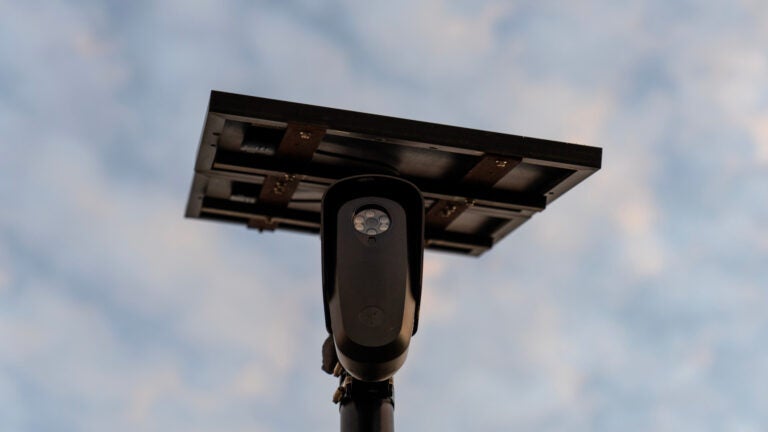
Investigators turned to the Flock Safety camera network to help identify the shooter behind the MIT and Brown killings, using eyewitness accounts and license plate data to crack the case.
But the same technology that helped police move quickly has raised questions about whether the expanding surveillance system comes at the expense of privacy rights.
“The technology has some real positives for law enforcement,” said Matt Ross, a professor of public policy and economics with expertise in policing at Northeastern.
He continued, “But now is the time to pass legislation to put some guardrails around this because frankly, there really are not.”
On Saturday, a man killed two Brown University students, injuring nine others, before traveling to Brookline on Monday to fatally kill an MIT professor. On Thursday, law enforcement officials found him dead in a storage facility in New Hampshire.
Since then, AP reported that police said information from a tipster who had a strange encounter with the man outside Brown University was key to their finding the suspect.
“He blew this case right open,” said Rhode Island Attorney General Peter Neronha of the information provided by the individual that resulted in finding the gunman nearly 24 hours later.
“When you crack it, you crack it,” he said.
How Flock Safety helped
That information was simply a description of a vehicle: a gray Nissan. That one detail led police to search the network of more than 70 street cameras operated around the city by the technology company Flock Safety for video of the Nissan Sentra sedan with Florida plates.
“That’s how Flock was designed and built,” said Josh Thomas, Chief Communications Officer of Flock Safety. “It was to help in exactly like situations like this.”
Investigators were able to access the Flock Safety system, enter the car’s description, and find a limited list of those in the area, Thomas said. Police narrowed it down further by searching for vehicles matching the description near Brown University.
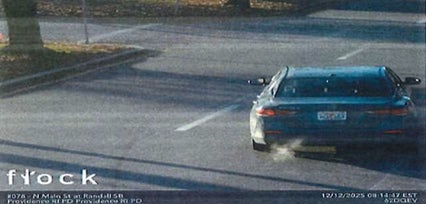
Since there was only one suspect car near Brown, the police used that license plate and entered it into the Flock system to see where else the cameras had picked up the plate in the last 30 days, crossing municipal and state borders.
Traditional license plate readers would not have been able to do this at all, let alone as efficiently. There was no initial license plate number to do a query. The software was able to go back in time, identify which cameras the car passed and when, and send a report to the officers.
By doing so, Thomas said, the police were able to connect the car back to the rental company.
“That’s how they got the lead that broke the case,” he said.
The debate
However, the technology behind the Flock Safety cameras is up for debate.
Documents obtained by the ACLU of Massachusetts show that police across the state track drivers’ locations using Flock Safety and share that data with more than 7,000 agencies nationwide, including in states with restrictive abortion, immigration, and gender-affirming care laws.
According to 404 Media, some agencies have misused the system, including a Texas department that accessed Massachusetts data to track a woman who self-administered an abortion and local police who searched the database on behalf of ICE.
“Licence plate reader technology can play a valid and important role in legitimate, targeted criminal investigations, as this case shows,” said Kade Crockford, Director of Technology and Justice Programs, in a statement to Boston.com.
“Our concern has always been its use in warrantless, dragnet surveillance of drivers without any probable cause or reasonable suspicion,” she continued.
Locally, the debate has come up in Brookline, where officials paused law enforcement use over privacy concerns. In October, the Cambridge City Council voted to pause the city’s use of Flock Safety license plate readers, citing similar issues.
Cambridge canceled their contract with Flock Safety on Dec. 10, Thomas said.
“One week later, a serial killer who killed a professor at MIT was caught with these exact cameras,” Thomas said. “Our point of view is, don’t make a rash decision and cancel the technology. Regulate it.”
Thomas argues that every Flock customer can decide how the data is used or shared.
“It’s really, really sad to me that a place like Cambridge would, because of these hypothetical concerns, cancel using technology that just found a serial killer or killed one of their own professors,” said Thomas. “That, to me, is just unbelievably tragic.”
The gray area
However, the issue at hand is more in the “gray area,” especially when law enforcement agencies have access to this powerful tool without needing a warrant, said Ross from Northeastern.
Ross said residents have largely not consented to being filmed everywhere by an expansive network of cameras that can connect separate data points to draw a picture of people’s locations, raising serious concerns about privacy and the level of access granted to law enforcement.
He acknowledged that the technology is a “huge step forward” for law enforcement, but that society needs to give pause to set some boundaries on who has access to it.
Otherwise, Ross said, there might be broad overreach, leading to a “Orwellian world” like China, where everybody is being watched all day.
“Yeah, there’s no crime,” said Ross. “But at the same time you’re being watched all the time in this oppressive way … I don’t think we want to end up like that.”

Sign up for the Today newsletter
Get everything you need to know to start your day, delivered right to your inbox every morning.