


Gardening
The eastern bluebird reminds me that spring is not so far off after all.
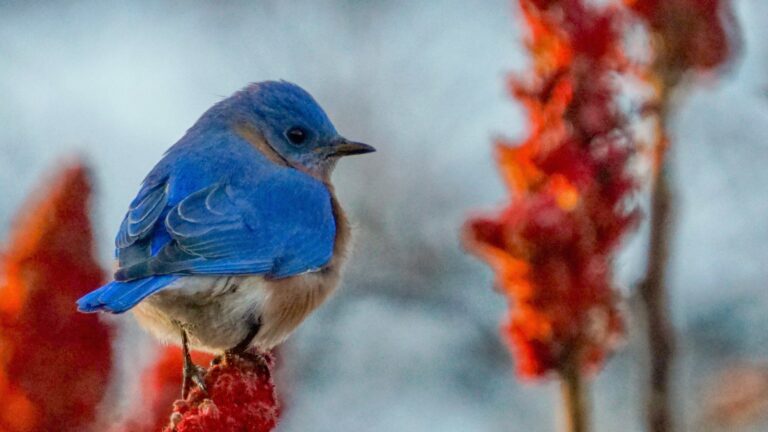
As I write, the snow is swirling again. My fire pit in the backyard, already more than half buried from the last big storm, has completely vanished from view. It will take a while for all that snow to melt and for the ground to feel the warmth of the sun. Yet, the lack of visible signs from the plant world has not diminished my enthusiasm for the coming of spring. Quite the contrary, the birds have been a source of joy for weeks now.
We have set out a single bird feeder during winter for years, but this year I added a few new items, and the results have been inspiring. Suet feeders provide a crucial source of high-energy fat and protein for birds, helping their high metabolisms generate heat. They reliably draw all manner of woodpeckers, chickadees, and nuthatches. Other year-round residents like titmice, dark-eyed juncos, and bluejays have joined the feast. We hung ours under the front porch so that my children can sit in the living room and observe the birds. It’s “almost” better than TV!
The second new addition this winter has been to introduce freeze-dried insects. Since we keep chickens as well, we often purchase a product for them called Flock Party, a blend of freeze-dried army and soldier fly larvae. In our home, we are fond of the phrase, “Don’t yuck someone else’s yum.” Indeed, while the idea of eating freeze-dried larvae seems supremely unappealing to me, it has drawn a song bird to our home that brings me absolute delight. This bird is recognized by many to be harbinger of spring, of good luck, and a symbol of joy. The eastern bluebird reminds me that spring is not so far off after all.
Bluebirds and their cousin, the American robin, are nomadic birds whose summer diets consists mainly of insects. They shift their diets to fruits, nuts, and seeds during the winter and generally travel south where insects begin emerging earlier. By offering them a source of insect protein, you can convince them to stay in your garden. Equally important to early spring migrations, as well as the year-round residents, are fruit bearing shrubs. The combination of a habitat, fruit and seed resources, and supplemental food (i.e. suet, bird seed, and insect protein) are a sure-fire way to enjoy our feathered friends year-round. If you have the space, consider erecting bluebird nesting box — even better, put up more than one (spaced approximately 100 feet apart) as they like each other’s company and often travel in small flocks. Even if they do not choose to nest in your yard, they will roost together over the winter especially if there is ample food available.
Henry David Thoreau once wrote, “The bluebird carries the sky on its back”; he was on to something that science has proven to be true.
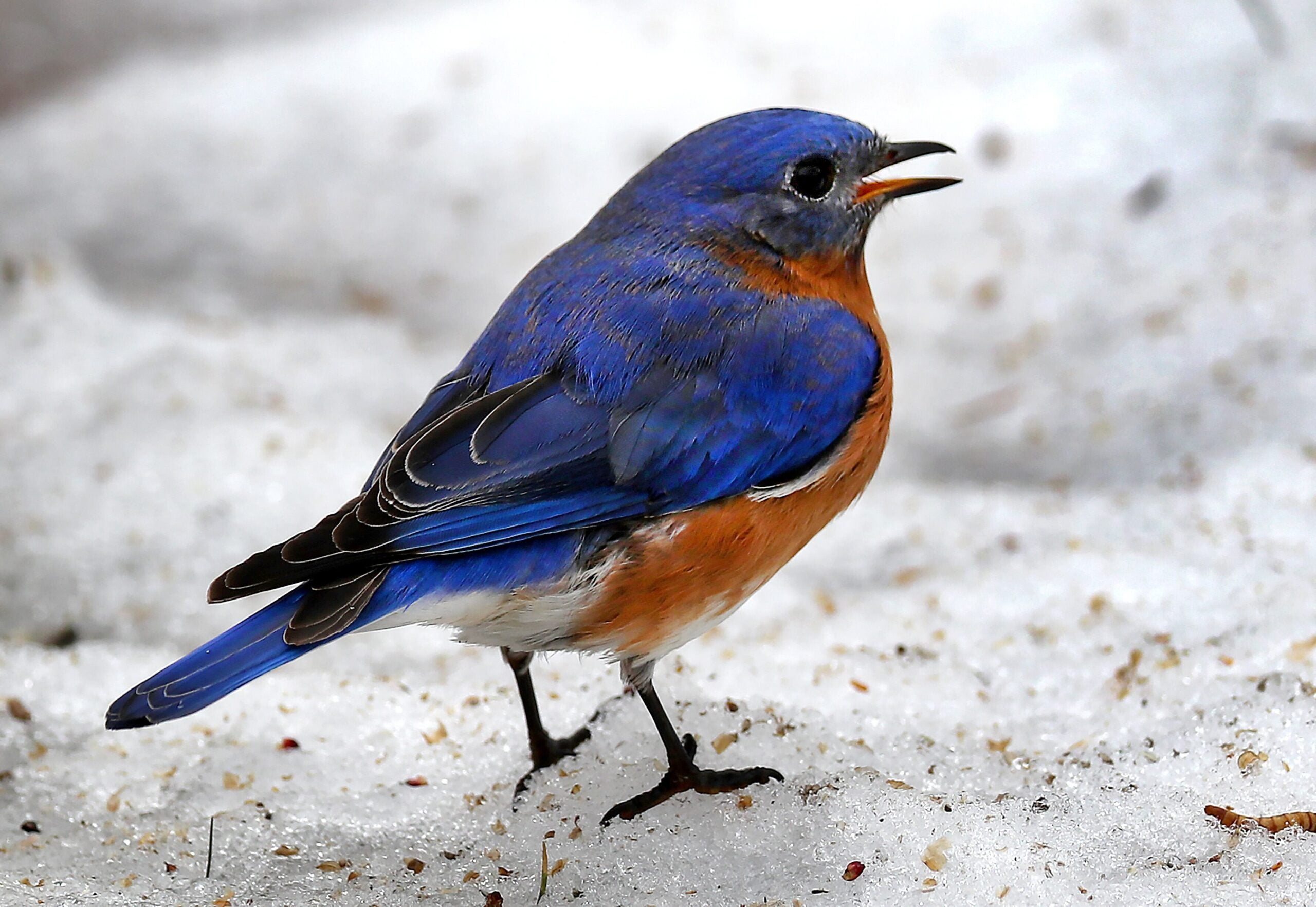
A bluebird’s feathers are not actually blue — in the same way the sky is not actually blue — rather we perceive the color based on how light waves refract. Red and yellow feathers are the result of pigments like carotenoids that are found in the food birds eat. For example, cardinals that consume large quantities of (ecologically harmful) bright red honeysuckle berries become a vibrant shade of red as a result. The downside is that they are easier to see by predators and are more often eaten. The blue color that we see in bluebirds and bluejays is the result of structural proteins in their feathers called keratins that subtly absorb all other colors in the spectrum, and reflect back to our eyes the many hues of blue.
Whatever visual trick the bluebird plays, the rich blue color is incredibly welcome in the snowy landscape. Just writing this column about them has brought the comfort of knowing the natural world will again awaken from winter dormancy for yet another fresh start. Does any songbird more reliably elicit a smile than the bluebird?
Address Newsletter
Our weekly digest on buying, selling, and design, with expert advice and insider neighborhood knowledge.
