


Real Estate
As we light up our Christmas trees, turn on space heaters, and tend to our fireplaces, it’s time to be mindful.

Having recently talked about fireplaces and wood stoves, we thought a tip of the cap to fire and carbon monoxide safety might be warranted. As we light up our Christmas trees, turn on space heaters, and tend to our fireplaces and wood stoves, we should be making sure the holiday season with our families and friends is a safe one.
Smoke and carbon monoxide (CO) detectors
Everyone is familiar with battery-operated smoke detector systems that have been on the market for decades. These units have changed over the years, and where we need to install them has changed as well. For this article, we will focus on what Massachusetts state law requires.
Homes built before 1975 can still use battery-operated smoke detectors and generally don’t have to abide by rules around location. The battery-operated units do need to be UL safety listed and have a 10-year sealed battery, not a throwaway 9-volt. They also need to have a “hush” button to allow someone to quiet the detector after a nuisance alarm. These features prevent someone from taking the battery out and forgetting to reinsert it. Homes built after 1975 (or built before 1975 that have had substantial remodeling work done on them) need to bring the system up to today’s code — but we encourage everyone to bring their homes up to Massachusetts standards, whether you need to or not. Given what’s at risk, it’s a modest investment.
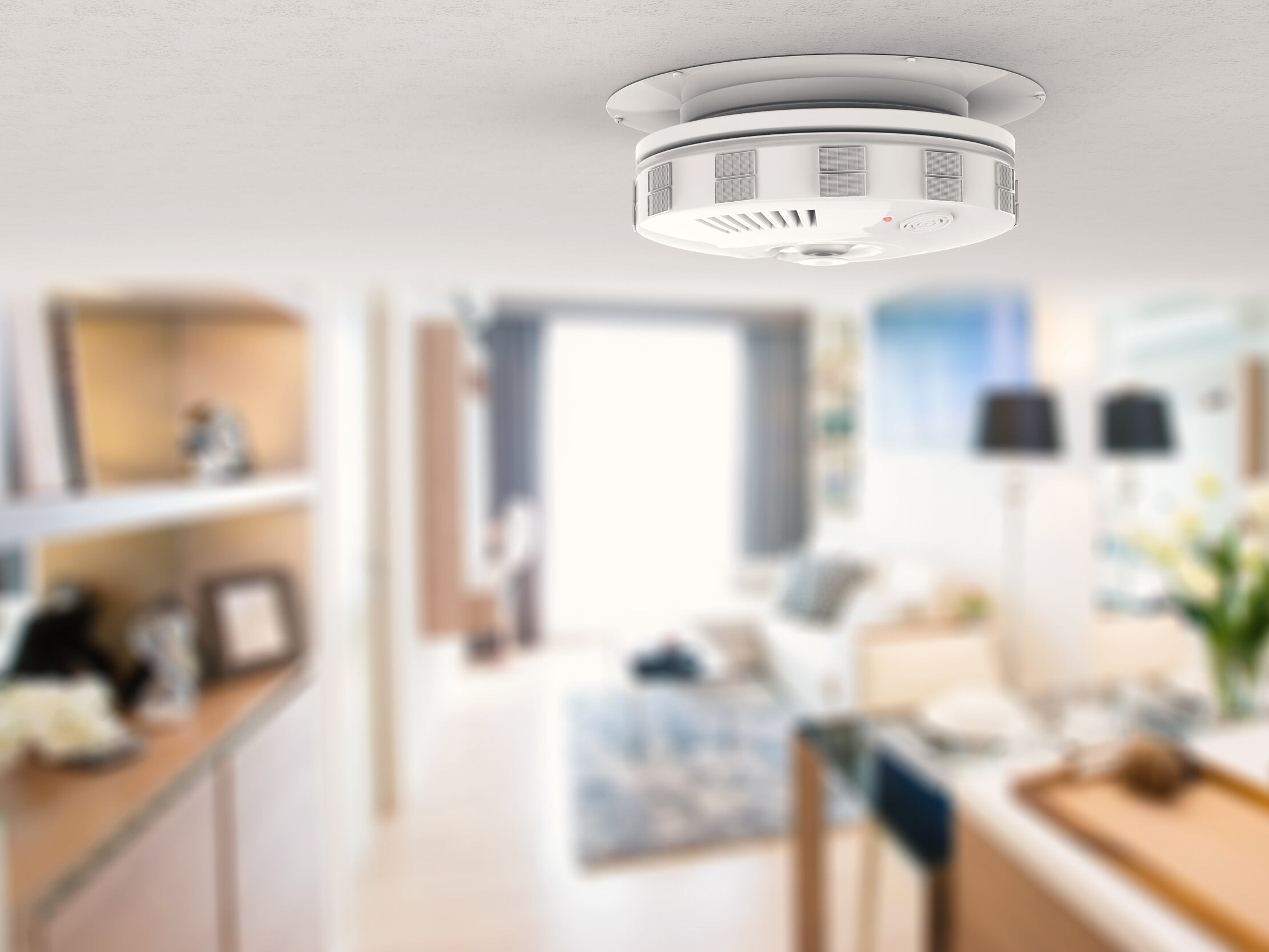
Massachusetts codes require a hardwired smoke and CO detection system using photovoltaic systems or dual systems using photovoltaic/ionization units. To bring them up to code, we need to locate smoke detectors in every bedroom within 3 feet of the doorway, high up on a wall or on the ceiling. CO detectors need to be on each level of the house and within 10 feet of any bedroom. They also need to be in proximity to any fuel-burning appliance. This includes near boilers and furnaces, gas fireplaces, or stoves, and near a kitchen with gas appliances.
CO detectors have taken on added importance nowadays with the large-scale use of sealed combustion heating equipment. These are far more common now because of their efficiency, but they don’t have a flue pipe that goes up the chimney to vent; they have a PVC intake and exhaust pipe that typically will go through the house just above the foundation. Yellow signs warning to keep these areas clear are required. The possibility exists that if snow is not removed and the flue pipe gets blocked, carbon monoxide will back up into the house.
Wireless systems are allowed under Massachusetts codes, with some caveats. These systems aren’t truly wireless; each unit does need an AC power source. However, the individual units in the system can communicate wirelessly, which avoids having to open ceilings and walls to join the entire system together.

Fire extinguishers
With proper detection systems in place, it is easy to forget fire extinguishers. There are no Massachusetts codes for a single-family home, just recommendations. It is recommended to have one on each floor. A garage or workshop should have one as well. A typical home should have an ABC model extinguisher; these are rated for wood/paper, electrical, and kitchen fires. They should be in an easy-to-see area, roughly chest height off the floor. Most extinguishers will last 10 to 15 years and have a gauge on the top that shows if it’s still pressurized.
Fire plan
Finally, it is always wise to have a family discussion on getting out of the house in the event of a fire. It’s not something anyone wants to talk about, especially this time of year. Every house is different. Some have roofs to climb out on from the second floor. If there is a basement bedroom, is there a large enough window to climb out of — or better, a door? It’s worth the time to have that discussion in advance and adapt as the home evolves. It’s time well spent to keep you and your family safe this holiday season and throughout the year.
Mark Philben is the project development manager at Charlie Allen Renovations in Cambridge. Send your questions to [email protected]. Questions are subject to editing. Subscribe to the Globe’s free real estate newsletter — our weekly digest on buying, selling, and design — at Boston.com/address-newsletter.


Address Newsletter
Our weekly digest on buying, selling, and design, with expert advice and insider neighborhood knowledge.

