


Skiing
Skiers have been riding solo up General Stark Mountain since 1948.
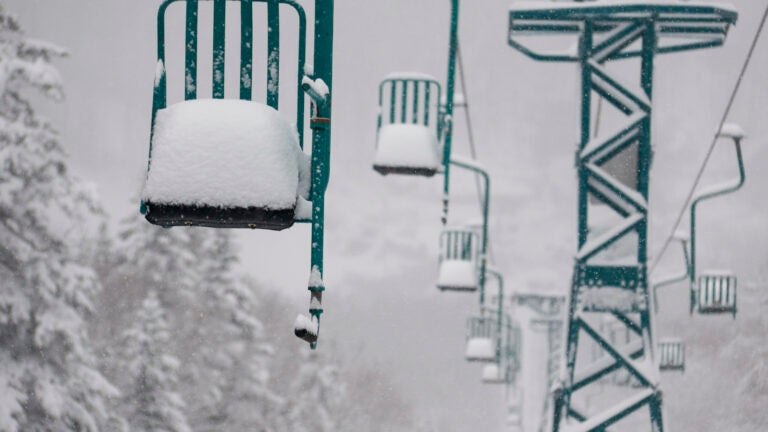
At Mad River Glen in Vermont, skiers get a unique experience.
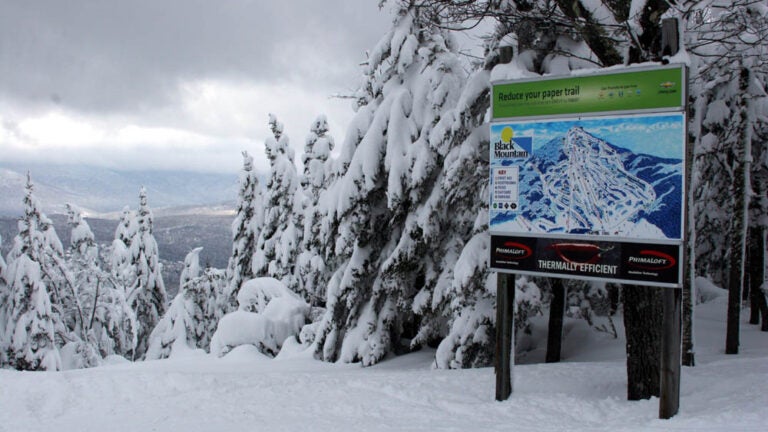
The 77-year-old ski area in the Green Mountains is home to the oldest continually operating single chairlift in the country and the only single chairlift in the continental U.S. (there’s another in Alaska).
Though the ride is rare in this area of the world, there are more than 100 single chairlifts still in existence in places like Europe, Japan, and Russia, said Ry Young, marketing and events manager at Mad River Glen.
“In Japan they call it a pizza box chair because, essentially, you are just sitting on a pizza box-sized chair,” Young said.
Young, a third-generation Mad River Glen skier, has been skiing the Fayston mountain his entire life and said there’s no where else quite like it — for many reasons.
Skiers take pride in the non-commercial experience at the independent ski area. Skiers also literally own the mountain: it is the first and only cooperatively owned ski resort in America. And it’s the only U.S. ski area on the National Register of Historic Places.
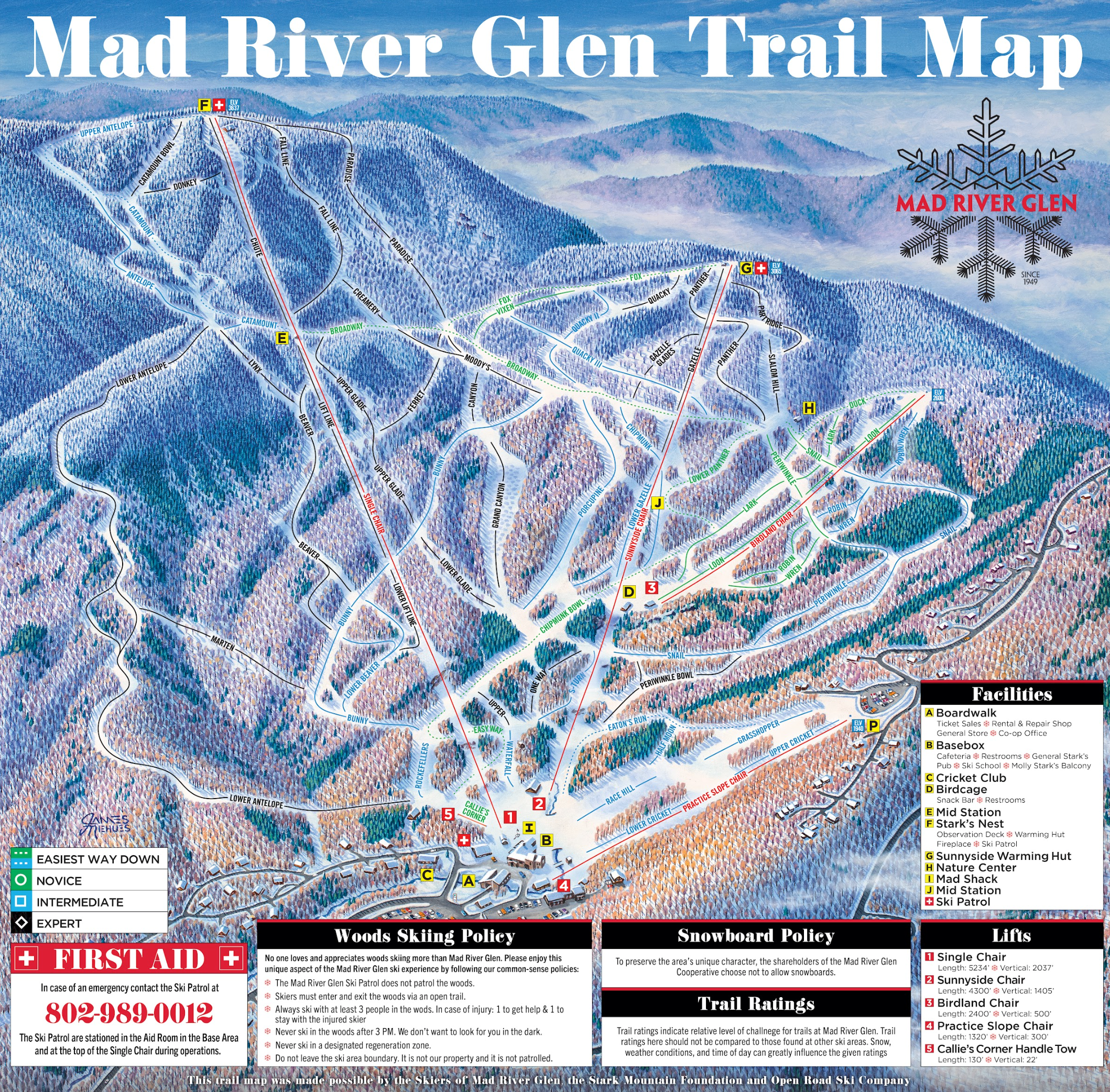
The resort, which offers 115 acres of trails and 800 acres of tree skiing, has 53 trails, five lifts, and a vertical drop of 2,037 feet. While dozens of beginner and intermediate trails are groomed regularly, the expert terrain (which makes up 45% of the mountain) is generally “left to the whims of Mother Nature,” according to the mountain’s website. Hence its “Ski It If You Can” slogan, which launched in 1984 and is still going strong.
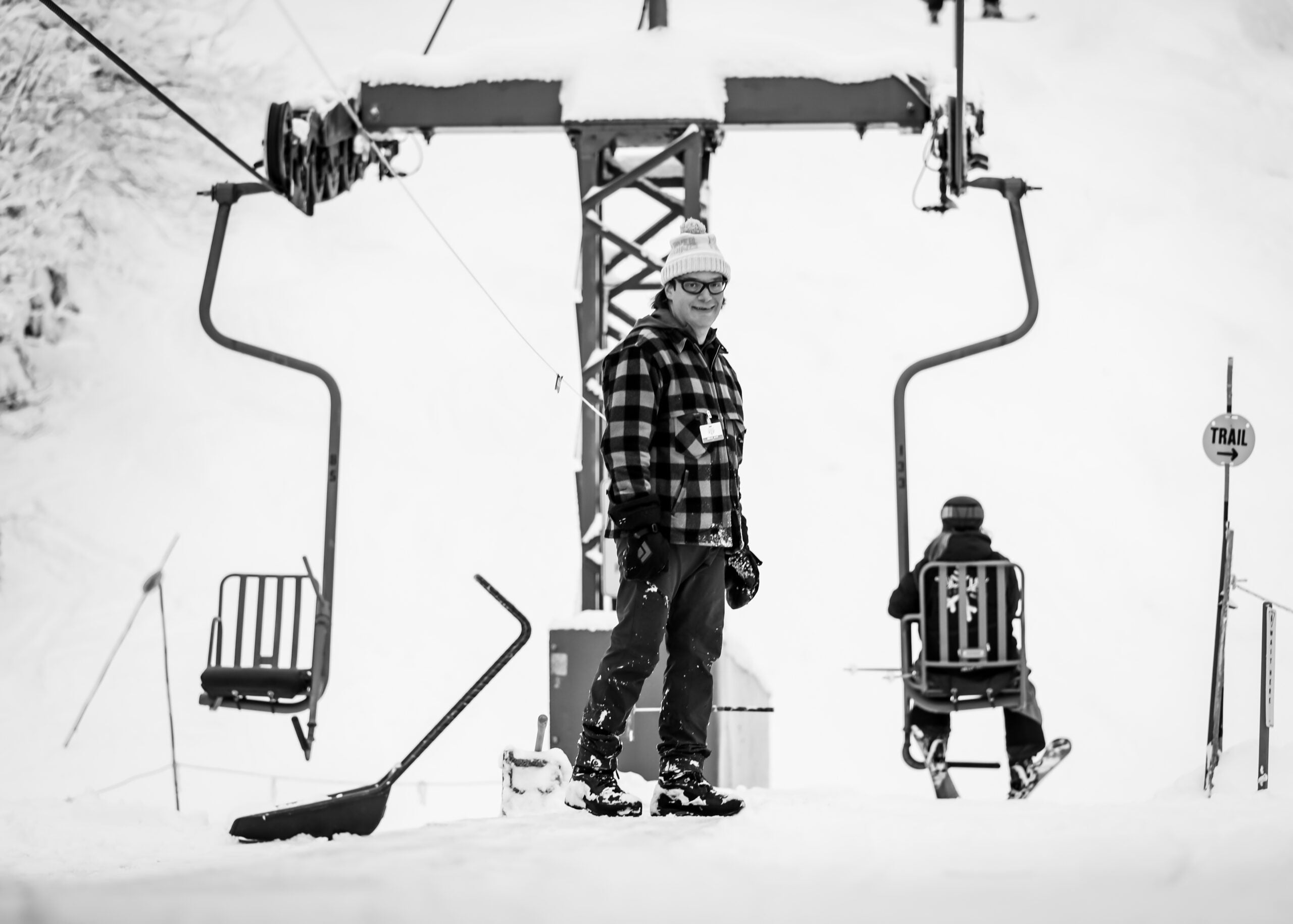
The mountain’s iconic Single Chair was built in 1948 and historically restored in 2007. It is billed as the fastest fixed-grip lift in North America, with 147 chairs that move about 600 feet per minute with a ride time of 9 1/2 minutes.
A ride on the lift is unlike any other because it brings alone time within nature that is unmatched at other mountains, said Young.
“As my predecessor once famously said, in today’s world you don’t have a whole lot of opportunities to get 10 minutes to yourself anymore,” Young said. “And that really becomes more and more true as the years go by with cell phones and social media. It really is meditative. It is therapeutic. It’s an opportunity to really be immersed in nature.”
Roland Polmedo, Mad River Glen’s founder and a pioneering developer of recreational skiing in America, worked with the American Steel & Wire Company to build the Single Chair, which was considered the fastest in the world when it debuted.
Polmedo founded the Mount Mansfield Corporation, which built Vermont’s first chairlift, the Mansfield Single, at Stowe (which ran from 1940-1986) before creating Mad River Glen.
“I believe it was 1947 when he decided that Stowe had lost its way and was too driven by commercial interests and had left the idea of sport behind,” Young said. “So he wanted to create a new ski area that was purely for sport and not for profit.”
Polmedo’s philosphy about skiing, posted on the Mad River Glen website, is as follows:
A ski area is not just a place of business, a mountain amusement park, as it were. Instead, it is a winter community whose members, both skiers and area personnel, are dedicated to the enjoyment of the sport.
Polmedo’s successor, owner Betsy Pratt, who was at the helm from 1972 to 1995, stayed true to Palmedo’s vision, Young said. She strove to maintain the ski area’s natural state as much as possible.
“As the ownership changed hands from Roland Polmedo to Betsy Pratt it was a rough time period for ski areas in general,” said Young. “Between the ’70s and ’80s there were hundreds of ski areas that were lost due to financial troubles. Betsy was tight with money, borrowed money, etcetera. I believe the Single Chair survived that period because there just really wasn’t enough capital for a new lift.”
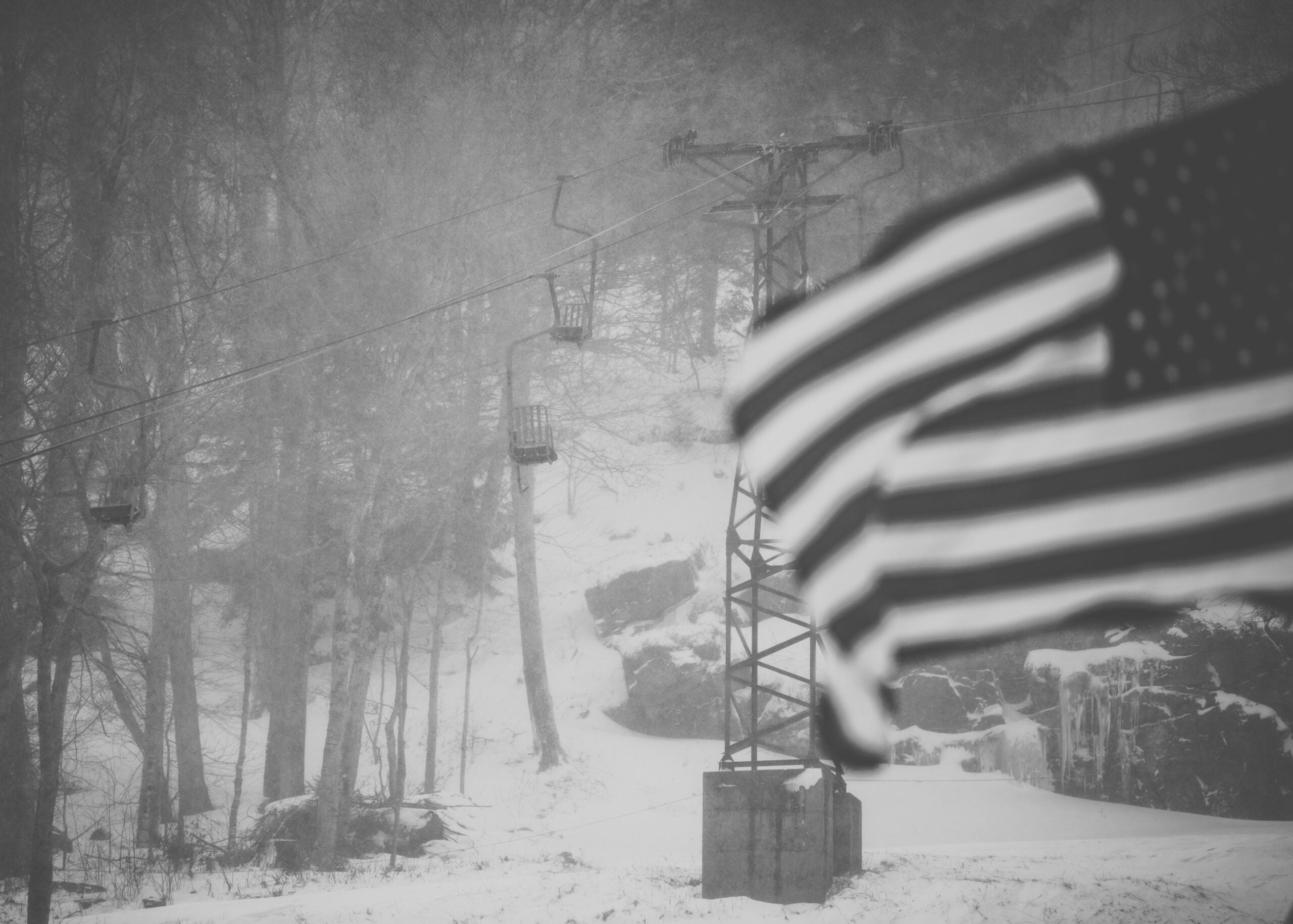
It was Pratt who turned Mad River Glen into the country’s first skier-owned co-op. The Mad River Glen Cooperative formed in 1995, at a time when the ski industry was becoming more commercialized, said Young. But Mad River Glen stayed true to its roots.
“This is our 30th year of cooperative, which is a remarkable milestone,” he said. “When it formed a lot of people didn’t think we’d be successful at it. We are really thriving. The coop is as strong as it’s ever been. We just recently sold out of shares.”
Mad River Glen Cooperative reached it’s limit of 2,500 shareholders in October.
When the cooperative formed, there was a vote to decide what to do with the Single Chair, Young said.
“The less expensive option would have been to put in a double chair and the price tag on replacing the single was significantly more expensive,” he said. “People, I think, realized that it wasn’t just a piece of machinery, it was a good part of the history of Mad River, a vibe, and really iconic to the brand.”
The vote was not unanimous, Young said, but the majority of shareholders wanted to keep the single.
“When I told my colleagues in the ski industry that we were restoring the single-chair lift, they looked at me like I had three heads,” Eric Friedman, former marketing director, told Preservation magazine. “It absolutely flies in the face of everything in the ski industry—this idea of bigger, better, faster.”
The Mad River Glen community then raised $1.8 million to restore the lift in a campaign called Preserve our Paradise.
“It goes along with Roland’s original vision of this as a mountain for sport and not profit,” Young said. “We’re not really trying to put more people on the mountain any quicker than we already are. Because if we did, you wouldn’t really be able to enjoy the serenity of nature around you.”
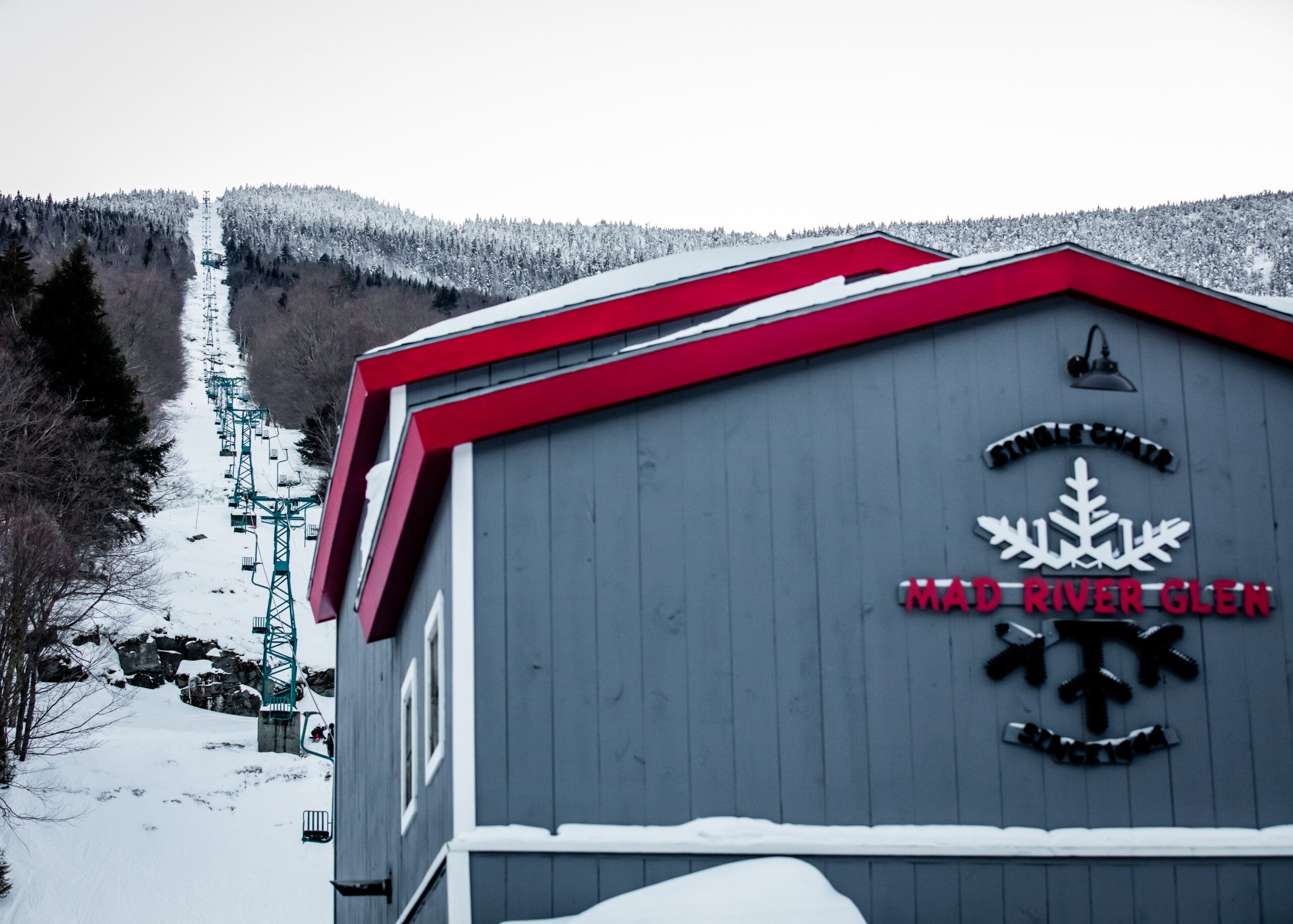
Mad River Glen has made headlines for another reason over the years: it is currently one of three ski resorts in North America that bans snowboarding.
The mountain was actually one of the first in the country to allow snowboarding back in the ’80s, said Young, but then Pratt banned snowboarders during the 1991/92 season due to safety concerns on the Single Chair.
“In order to get off and get momentum they were pushing the chair and the haul rope was derailing from the sheave wheel and it happened over and over again,” said Young. “It was a safety issue. It just wasn’t sustainable to keep allowing that to happen.”
When the co-op took over the mountain in 1995, the shareholders voted on the issue, with more than 75% voting to keep the ban.
“There’s still some pushback, especially on social media,” Young said.
But, overall, skiers at the historic mountain are happy with the experience and culture there, Young said.
“I encourage anybody who hasn’t ridden the Single Chair to come up and experience it, that visceral feeling, that meditative state,” said Young. “And it might change your perspective. It might not, and that’s OK. That’s just sort of the vibe that we have here and, I think, what draws people back year after year.”

Sign up for Scenic Six
Navigate the endless possibilities of New England travel with Boston.com.

